
Java
异常体系结构
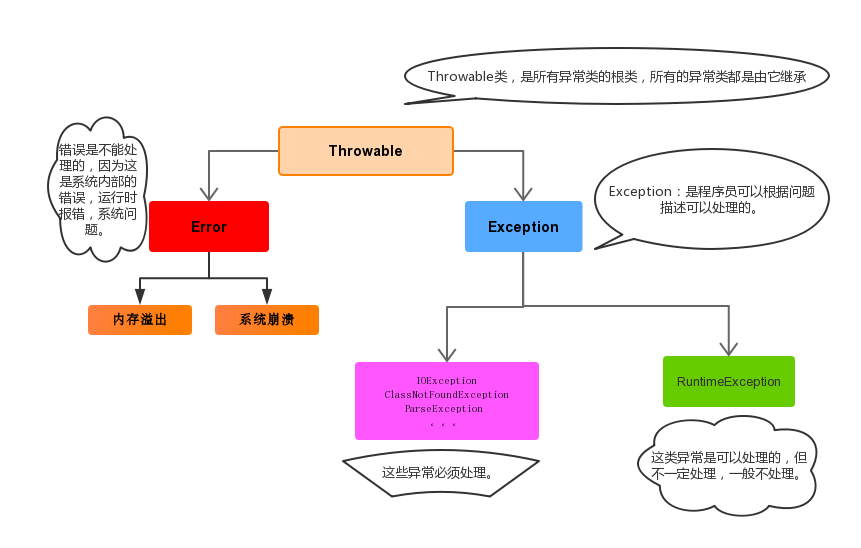
java.lang.Error:一般不编写针对性的代码进行处理java.lang.Exception:可以进行异常的处理- 编译时异常(checked)
IOExceptionFileNotFoundExceptionClassNotFoundException
- 运行时异常(unchecked,RuntimeException)
- NollPointerException
- ArrayIndexOutBoundsException
- ClassCatsException
- InputMismatchException
- ArithmeticException
2.从程序执行过程,看编译时异常和运行时异常
编译时异常:执行javac.exe命令时,可能出现的异常
运行时异常:执行java.exe命令时,出现的异常
异常处理
1. java虚拟机处理
程序在正常执行的过程中,一旦出现异常,就会在异常代码处生成一个对应异常类的对象。并将此对象抛出。一旦抛出对象以后,其后的代码就不在执行, 并且使用红色字体输出异常信息。
关于异常对象的产生:
系统自动生成的异常对象 手动的生成一个异常对象,并抛出throw
危险
java
int[] array = {1,2,3};
// 数组越界
System.out.println(array[10]);
Exception in thread "main" java.lang.ArrayIndexOutOfBoundsException: Index 10 out of bounds for length 3
手动捕获抛出异常
- 抛出异常:
throw new 异常类 - 捕获异常:
try...catch
try...catch
java
try {
    //可能出现异常的代码
} catch(异常类型1 变量名1) {
    //处理异常的方式1
} catch(异常类型2 变量名2) {
    //处理异常的方式2
} catch(异常类型3 变量名3) {
    //处理异常的方式3
} finally {// 可选
    //一定会执行的代码
}
提示
如果try中出现了异常, 就会被catch给捕获
代码演示
java
public class Demo8 {
    public static void main(String[] args) {
        //要求: number的长度小于等于10位, 将类型String转换为int类型
        try {
            //可能出现异常的代码
            int result = method("1d3");
            System.out.println(result);
        } catch (NumberFormatException e) {
            //注: 异常的子类要在前, 如果父类在前, 则子类无法捕获到异常, 因为父类能捕获到所有子类的异常
            System.out.println("number数据不合法");
        } catch (RuntimeException e) {// 父类在后
            //手动处理异常问题
            System.out.println("number的长度小于等于10位");
        }

    }

    public static int method(String number) {
        if(number.length() > 10) {
            //可能出现的错误1 RuntimeException
            throw new RuntimeException();
        }
        //可能出现的错误2 NumberFormatException
        return Integer.parseInt(number);
    }
}
提示
异常的子类要在前, 如果父类在前, 则子类无法捕获到异常, 因为父类能捕获到所有子类的异常
自己处理可能出现的问题
- 如果try中的没有遇到问题, 怎么执行?
- 则不会执行catch里面的语句, 并且继续向下执行代码
- 如果try中遇到了多个问题, 怎么执行?
- 当抛出一个异常之后,
try中的代码就不再执行, 而是跳转到catch中去执行
- 当抛出一个异常之后,
- 如果try中遇到的问题没有被捕获, 怎么执行?
- 则此异常会被java虚拟机处理, 并且输出异常信息
- 如果try中遇到了问题, 那么try下面的代码会执行吗?
- 不会执行
异常中的或运算符
|: 或运算符, 表示或的关系, 如果多个异常处理的方式一样, 则可以使用或运算符
java
public class Demo9 {
    public static void main(String[] args) {
        try {
            String[] arr = {"1", "2", "3"};
            String str = arr[10];
            int num = Integer.parseInt(str);
        } catch (ArrayIndexOutOfBoundsException | NumberFormatException e) {
            //如果多个异常处理的方式一样, 则可以使用或运算符
            System.out.println("数据非法");
        }
    }
}
throw 和 throws
- throw: 抛出异常
- throws:
throws 异常类型, 异常类型,...写在方法的声明处。表示此方法执行时,可能会抛出的异常类型。
一旦方法体执行时,出现异常,仍会在异常代码处生成一个异常类的对象,此对象满足throws后异常类型时,就会被抛出。异常代码后续的代码,就不再被执行。
java
//NumberFormatException是运行时的异常, 运行异常可以手动不写
public static int method(String number) /* throws NumberFormatException */ {
    if(number.length() > 10) {
        throw new RuntimeException();
    }

    return Integer.parseInt(number);
}
提示
运行异常可以不需要使用throws列举出来, 而编译异常一定要列举出来
异常的常用方法
| 方法名 | 作用 |
|---|---|
public String getMessage() | 返回此 throwable 的详细信息字符串 |
public String toString() | 返回可抛出的简短描述。 |
public void printStackTrace() | 把异常错误输出到控制台中 |
java
public class Demo8 {
    public static void main(String[] args) {
        //要求: number的长度小于等于10位, 将类型String转换为int类型
        try {
            //可能出现异常的代码
            int result = method("1d3");
            System.out.println(result);
        } catch (NumberFormatException e) {
            System.out.println(e.getMessage());//For input string: "1d3"
            System.out.println(e.toString());//java.lang.NumberFormatException: For input string: "1d3"
            System.out.println("number数据不合法");
        } catch (RuntimeException e) {
            //手动处理异常问题
            System.out.println("number的长度小于等于10位");
        }

    }

    public static int method(String number) {
        if(number.length() > 10) {
            throw new RuntimeException();
        }

        return Integer.parseInt(number);
    }
}
自定义异常
- 为什么需要自己写异常呢?
- 有些时候某个java自己写的异常无法满足我们的要求, 就需要自己写异常.
- 目的: 报错信息更加详细, 方便定位问题
- 书写格式:
XxxException
- 定义异常类
- 继承关系(如果是编译异常, 则继承
Exception; 如果是运行时异常, 则继承RuntimeException) - 空参构造
- 带参构造
java
import java.util.Scanner;

public class App {
    public static void main(String[] args) {
        Girlfriend girl = new Girlfriend();
        Scanner sc = new Scanner(System.in);
        while (true) {
            System.out.println("输入女朋友的姓名和年龄, 按照格式: 姓名 年龄. 姓名的长度在3-10之间, 年龄在18-40之间");
            String s = sc.nextLine();
            String[] arr = s.split(" ");
            try {
                girl.setName(arr[0]);
                girl.setAge(Integer.parseInt(arr[1]));
            } catch (NameFormatException | AgeFormatException e) {
                System.err.println(e.getMessage());
                continue;
            } catch (NumberFormatException | IndexOutOfBoundsException e) {
                //数组越界访问和类型转换问题都有格式导致
                System.err.println("输入格式错误");
                continue;
            }
            System.out.println(girl);
            break;
        }


    }
}
java
public class Girlfriend {
    private String name;
    private int age;

    public Girlfriend() {
    }

    public Girlfriend(String name, int age) {
        this.name = name;
        this.age = age;
    }

    /**
     * 获取
     * @return name
     */
    public String getName() {
        return name;
    }

    /**
     * 设置
     * @param name
     */
    public void setName(String name) {
        //姓名长度在3-10之间
        if(name.length() < 3 || name.length() > 10) {
            //抛出异常
            throw new NameFormatException(name + "的长度没有在3-10之间");
        }
        this.name = name;
    }

    /**
     * 获取
     * @return age
     */
    public int getAge() {
        return age;
    }

    /**
     * 设置
     * @param age
     */
    public void setAge(int age) {
        if(age < 18 || age > 40) {
            throw new AgeFormatException(age + "不在18-40之间");
        }
        this.age = age;
    }

    public String toString() {
        return "Girlfriend{name = " + name + ", age = " + age + "}";
    }
}
java
public class NameFormatException extends RuntimeException {
    public NameFormatException() {
    }
    //message在被捕获后, 通过getMessage()方法获取
    public NameFormatException(String message) {
        super(message);
    }
}
java
public class AgeFormatException extends RuntimeException {

    public AgeFormatException() {
    }

    public AgeFormatException(String message) {
        super(message);
    }
}